
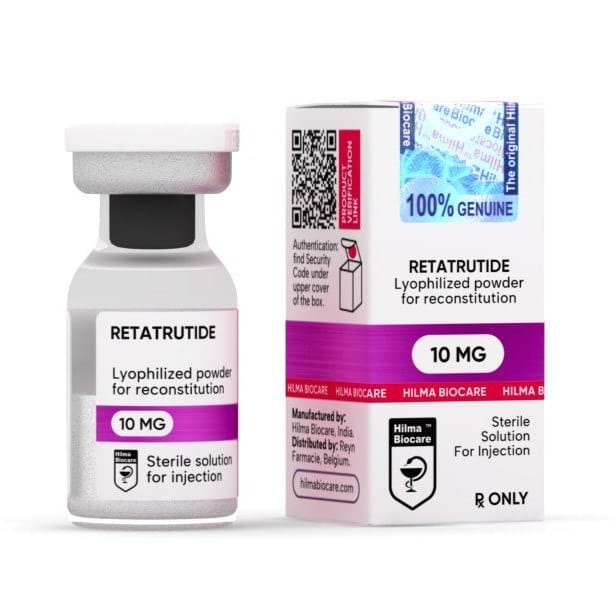
Retatrutide: Mechanism of Action, Dosing, and Practical Use in Weight Management
Retatrutide is a relatively new compound in the field of weight management and is often discussed as a continuation of incretin based therapies. In simple terms, it builds on what was already established with GLP 1 medications and takes it further.
If we look at the progression:
- Semaglutide works mainly through GLP 1, affecting appetite and gastric emptying
- Tirzepatide adds GIP, which enhances the metabolic response
- Retatrutide targets three receptors at the same time: GLP 1, GIP, and glucagon
Because of this, its effect is not limited to appetite control alone.
From a physiological standpoint, two things are happening in parallel:
- appetite regulation and reduced caloric intake
- increased energy expenditure, including lipolysis and thermogenesis
In practice, this usually translates into eating less without forcing it, while energy output is slightly higher than baseline.
Dosing and Administration
Retatrutide is used as a once weekly subcutaneous injection.
There is no single strict protocol that fits everyone. In most cases, dose is adjusted gradually based on individual response and tolerance.
A common starting point:
- Weeks 1 to 4: 1 mg once weekly
After that, the dose is increased step by step if needed.
From practical use:
- 2 to 4 mg per week is where most people start noticing clear appetite suppression
- 4 to 6 mg per week usually provides a stronger and more stable effect
- doses above 6 mg are not always necessary and are typically used only if well tolerated
One important point: the goal is not to completely eliminate hunger. A mild to moderate calorie deficit tends to work better long term.
Dose adjustments are usually made:
- every 1 to 2 weeks
- or slower, if the person is more sensitive
Injection Method
Administration is subcutaneous. The most common sites are:
- abdomen
- thigh
- upper arm
It is recommended to rotate injection sites to reduce the risk of local irritation. Nothing complicated here, just basic consistency.
Nutrition and Lifestyle Factors
Like with any weight management approach, results depend heavily on basic habits.
What generally works best:
- protein intake around 1.6 to 2.2 g per kg body weight
- regular resistance training
- some level of calorie awareness (no need for extremes)
- adequate hydration and electrolyte balance
- fiber intake in the range of 25 to 40 g per day
High fat meals can sometimes increase nausea, especially early on or during dose increases, so this is something to keep in mind.
Supportive Supplementation
Not mandatory, but often helpful in practice:
- electrolytes
- magnesium
- omega 3
- vitamin D
These are mostly used to improve general well being and tolerance.
Monitoring
Basic lab monitoring is recommended, especially over longer periods:
- glucose, insulin, HbA1c
- lipid profile
- liver enzymes
This is standard and helps to understand how the body is responding overall.
Final Notes
Retatrutide is not just another GLP 1 based compound. Its triple receptor activity gives it a broader metabolic profile.
In practical terms, it combines appetite control with increased energy expenditure, which makes it more efficient compared to earlier options.
At the same time, results still depend on dosing, consistency, and basic lifestyle factors. When those are in place, it can be a very effective tool for fat loss.